


The Saskatchewan Breakthrough: Humphry Osmond, Aldous Huxley, and How a Rhyme Coined 'Psychedelic'
Updated: Sep 21
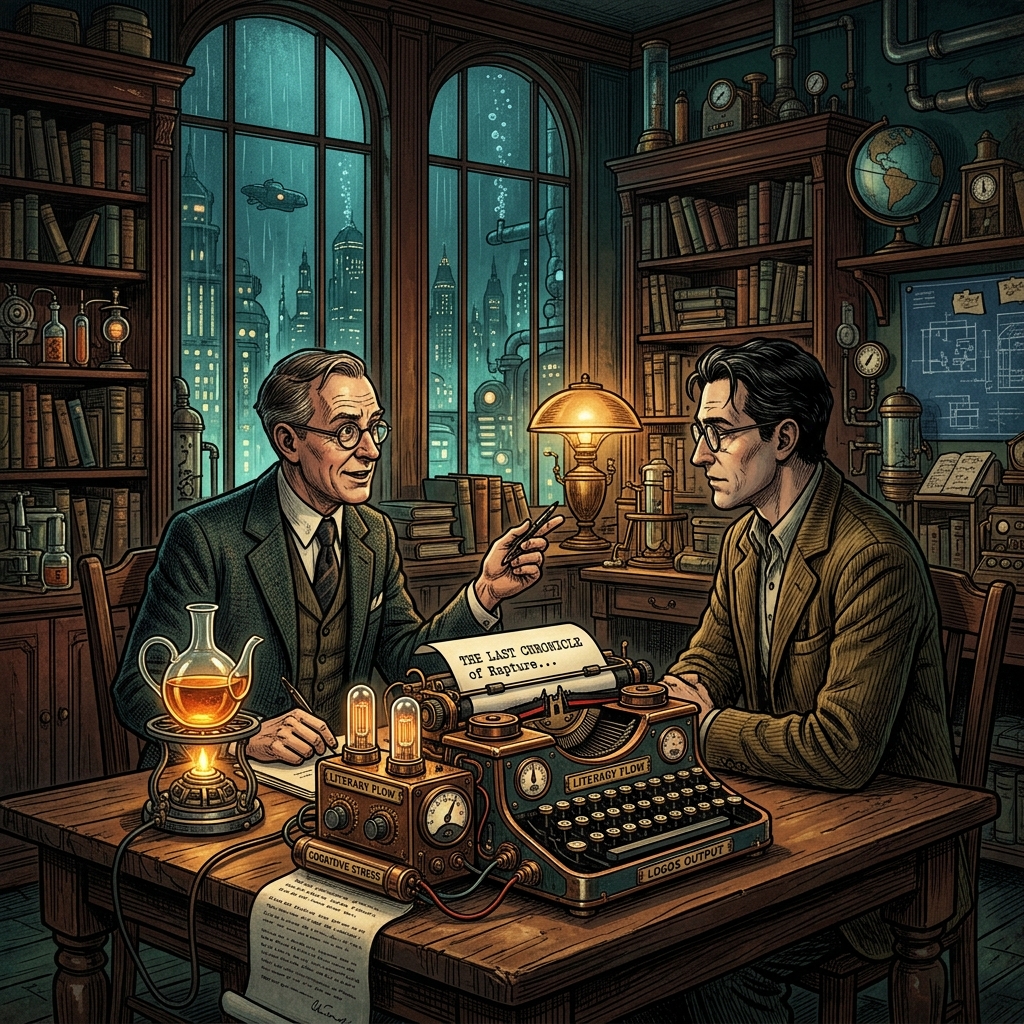
📖 The Origin Archives: Chapter III • The Protagonists: Dr Humphry Osmond (Surrey-born psychiatrist) and Aldous Huxley (author of Brave New World). • The Setting: The freezing prairie wards of Weyburn Mental Hospital in Saskatchewan, Canada, and a sun-drenched sitting room in the Hollywood Hills. • The Legacy: Landmark clinical trials achieving an unprecedented 50% recovery rate in chronic alcoholism, the birth of psychiatric hospital architecture, and a playful rhyming letter that coined the word: 'psychedelic'.
1. Exiled to the Frozen Prairies
In the austere, coal-smoked London of 1951, mainstream British psychiatry found itself firmly entrenched in therapeutic despair. Severe mental illness was viewed through the lens of rigid psychoanalytic dogma: patients were regarded as constitutional casualties of childhood trauma, destined for endless years on the analyst’s couch, numbed by paralytic doses of sedatives, or subjected to ice baths and crude electroconvulsive shocks. For a brilliant young psychiatrist from Surrey named Dr Humphry Osmond, this prevailing nihilism was utterly unconscionable.
Osmond had served as a Royal Navy naval psychiatrist during the Second World War, caring for severely shell-shocked sailors. He possessed an empirical, fearless temperament and was thoroughly convinced that psychiatric distress was not a moral defect or a conversational puzzle, but a biological and biochemical challenge. Yet when he attempted to explore the neurochemical roots of perception at St George’s Hospital in London, his senior colleagues scoffed at the notion that chemistry could explain the human soul.
Realising that the conservative British medical establishment would never tolerate his radical hypotheses, Osmond looked across the Atlantic. In the remote, windswept plains of western Canada, the newly elected socialist government of Saskatchewan Premier Tommy Douglas was pioneering the Western world's first universal healthcare system. Douglas’s administration was actively hunting for bold scientific visionaries to overhaul the province's mental healthcare system.
In the autumn of 1951, Osmond packed his bags, boarded an ocean liner, and journeyed into the frozen expanse of the Canadian prairie to take up the post of clinical director at the Weyburn Mental Hospital. To his peers in Harley Street, relocating from central London to a rural Canadian outpost buried under six feet of winter snow seemed like professional exile. To Osmond, it represented complete scientific liberty.
2. The Adrenaline Clue & Self-Testing in the Kitchen
Upon arriving in Weyburn, Osmond immediately teamed up with a brilliant young Canadian biochemist named Dr Abram Hoffer. Both men were intrigued by a striking chemical coincidence: the molecular structure of mescaline (the psychoactive alkaloid found in the peyote cactus) bore a remarkable resemblance to adrenaline (epinephrine), the body's primary stress hormone.
Osmond and Hoffer hypothesised that under extreme psychological stress or metabolic malfunction, the human body might accidentally produce oxidized adrenaline metabolites that distort sensory gating and produce hallucinations. In the grand tradition of nineteenth-century psychopharmacology, the researchers did not begin by experimenting on institutionalised patients; they began in their own kitchens.
Sitting around Hoffer’s dining table in Saskatoon, with Hoffer’s wife Rose keeping meticulous observational notes and making endless pots of Earl Grey tea, the two doctors methodically bioassayed mescaline and LSD. Osmond noted with clinical precision how the compounds softened the rigid boundaries of the ego, heightened auditory and colour perception, and evoked a state of profound, openhearted lucidity. More importantly, Osmond realised that these compounds were not blunt intoxicants—they were biochemical microscopes capable of making the hidden machinery of the psyche visible.
3. The Great Alcoholism Trials & The AA Connection
Armed with their new understanding, Osmond and Hoffer set out to tackle the most destructive, demoralising, and untreatable psychiatric crisis of the post-war era: severe, end-stage alcoholism.
In the 1950s, chronic alcoholics in asylum care were considered completely incurable. Osmond and Hoffer proposed a radical thesis: if a patient could experience an intense, spiritually transformative, and emotionally illuminating psychological breakthrough in a single supportive session, they might be freed from the compulsive grip of addiction.
Between 1953 and 1960, across multi-centre clinical trials in Saskatchewan, Osmond and his team administered single high doses of pure LSD (ranging between 200 and 600 micrograms) to chronic alcoholics who had failed every conventional treatment programme. The protocol was meticulous: patients were not strapped to gurneys; they were given comfortable armchairs, fresh flowers, classical music, and the continuous, reassuring presence of a trained nurse or therapist.
The statistical outcomes stunned the international medical world: • Over 2,000 patients were treated across multi-centre Canadian trials. • A verified 50% to 55% achieved permanent, multi-year sobriety after just one or two clinical sessions—a recovery rate unmatched in addiction medicine before or since. • Patients reported a complete dissolving of deep-seated guilt and a renewed capacity for human connection.
The news of the Saskatchewan trials soon reached Bill Wilson (Bill W.), the celebrated co-founder of Alcoholics Anonymous. Wilson, who had experienced his own spontaneous spiritual awakening in a New York hospital in 1934, was fascinated. In 1956, Wilson participated in supervised clinical LSD sessions under medical supervision in California and New York. He became an outspoken champion of the research, believing that the molecule offered a direct, non-addictive doorway to the profound spiritual transformation required by AA’s Twelve Steps.
4. The Architect Who Tripped to Design a Hospital
Osmond’s innovative spirit was not confined to pharmacology; he was equally fascinated by how the physical environment affected mental well-being. Weyburn Hospital was a cavernous, Victorian monster of long, intimidating corridors and panopticon wards. Osmond observed that these echoing spaces aggravated paranoia and sensory distress.
Determined to redesign psychiatric architecture from the ground up, Osmond hired renowned architect Kiyoshi Izumi to draft blueprints for new hospital facilities. To truly understand how an altered or distressed mind experiences architecture, Izumi took LSD under Osmond’s clinical supervision while walking through existing psychiatric wards.
Izumi noticed that long, straight corridors created terrifying optical illusions of infinite entrapment, reflective terrazzo tiles looked like deep water, and sharp corners induced severe panic. Drawing on this direct experiential insight, Izumi designed the new Yorkton Psychiatric Centre with circular floor plans, warm natural timber, curved corridors, and quiet, domestic-scale integration rooms. It became the world’s first 'sociopetal' psychiatric facility—an architectural philosophy that transformed modern hospital design worldwide.
5. Tea, Mescaline, and Flannel Trousers in the Hollywood Hills
In May 1953, Osmond travelled to Los Angeles for the annual meeting of the American Psychiatric Association. Whilst in California, he arranged a private house call to one of the most celebrated literary intellectuals of the century: Aldous Huxley, author of Brave New World.
Huxley was intensely curious about the philosophical nature of consciousness and had eagerly volunteered to be Osmond’s subject. On the morning of 4 May 1953, in Huxley’s West Hollywood home, Osmond dissolved 400 milligrams of mescaline into half a glass of water and handed it to the novelist. Osmond later confessed to feeling immense trepidation: 'I did not relish the possibility of being the man who drove Aldous Huxley mad.'
Instead, Huxley spent eight mesmerising hours wandering through his home and terrace garden, transfixed by what he termed the 'miracle, moment by moment, of naked existence.' Sitting in his study, he gazed at the delicate bamboo legs of a small table and the rhythmic folds of his own grey flannel trousers, observing with boundless delight that he was witnessing 'the visual reality of things as they truly are.'
Huxley sat down at his manual typewriter and immortalised the afternoon in his classic 1954 treatise, The Doors of Perception. Huxley proposed that the human brain normally acts as a 'reducing valve,' filtering out the vast flood of reality to ensure biological survival; mescaline temporarily opened this valve, allowing consciousness to experience what he termed 'Mind at Large.'
6. The War of the Rhymes: Coining a New Word
By 1956, Osmond and Huxley had forged a deep intellectual friendship. However, both men grew increasingly exasperated by the stigmatising and reductionist language being deployed by the psychiatric establishment.
Conservative clinicians insisted on calling these molecules 'psychotomimetics' (meaning 'mimicking psychosis') or 'hallucinogens' (meaning 'generating delusions'). Osmond and Huxley argued that these labels were scientifically misleading: the substances did not induce madness; they expanded awareness, facilitated emotional catharsis, and deepened empathy.
Determined to coin a proper, scientifically sound name before Osmond delivered a keynote address to the New York Academy of Sciences, the two Englishmen began trading witty rhyming letters across the continent.
Huxley made the opening gambit:
"To make this trivial world sublime, Take half a gram of phanerothyme."
Osmond admired Huxley’s linguistic ingenuity, but found phanerothyme rhythmically clumsy and difficult on the tongue. Sitting at his desk in Saskatchewan, Osmond combined psyche (mind or soul) and deloun (to make manifest, reveal, or unveil), and penned his immortal counter-couplet:
"To fathom Hell or soar angelic, Just take a pinch of psychedelic."
Osmond’s coinage was concise, poetic, and medically profound. In 1957, Osmond formally introduced the term 'psychedelic'—literally meaning 'mind-manifesting'—to the New York Academy of Sciences, forever cementing the word into global medicine, literature, and culture.
7. The Enduring Legacy of Weyburn
Beyond coining a household word, Dr Humphry Osmond bequeathed modern medicine its most vital clinical insight. He was the very first researcher to recognise and articulate the concept of 'set and setting'—proving that therapeutic outcomes are not merely a function of pharmacological dosage, but are fundamentally shaped by the inner psychological mindset ('set') of the individual and the compassionate physical environment ('setting') in which the therapy occurs.
When the political backlash of the late 1960s brought a temporary halt to clinical research, the pioneering work at Weyburn was buried in dusty academic journals. Yet today, as multi-centre Phase 3 trials at Imperial College London, Johns Hopkins, and Oxford University demonstrate unprecedented remission rates in treatment-resistant depression and substance use disorders, modern neuroscience is finally completing the extraordinary journey begun by the eccentric British doctor on the frozen Canadian prairie.
Dr Humphry Osmond passed away in 2004 at the age of 86. He was, to the very end, a physician of boundless intellectual bravery and quintessential British wit—a man who proved that with a little curiosity, a pinch of chemistry, and an open heart, the human mind could heal itself.
The Origin Archives: Curated by the OpenMind Initiative to document the extraordinary history, serendipitous breakthroughs, and pioneering scientists of psychopharmacology. Published exclusively for educational, historical, and harm-reduction purposes.


Comments